
 English

Blog
Provide One-Stop Customized Services
WCH is dedicated to providing high-precision and high-quality
tempered glass customization services for home appliance manufacturers.


2026-09-09 18:18:39
A Tempered Glass Oven Door is a durable and heat-resistant glass door designed for modern ovens, providing a clear view of the cooking chamber while helping improve safety and durability. Compared with ordinary glass, tempered glass offers higher mechanical strength and better resistance to thermal stress, making it suitable for demanding oven door applications.
As an important component of household and commercial ovens, tempered Oven Door Glass needs to withstand repeated heating and cooling cycles while maintaining good transparency and structural stability. It can also be manufactured in different sizes, shapes, thicknesses, colors, and configurations to meet OEM appliance requirements.
For oven manufacturers, appliance brands, and replacement-part suppliers, customized tempered glass oven doors provide a reliable solution for different oven models and door designs.
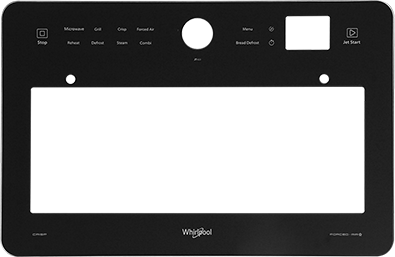
A tempered glass oven door is an oven door that uses specially processed tempered glass as the main viewing panel. Tempering involves controlled heating and rapid cooling of glass to improve its mechanical strength and resistance to thermal stress.
The glass panel is typically integrated with other components, such as a metal frame, handles, seals, hinges, and sometimes additional glass layers, to form the complete oven door assembly.
Oven doors are exposed to high temperatures and repeated temperature changes during cooking. Therefore, ordinary glass may not provide the required performance for many oven applications.
Tempered oven door glass is commonly selected because it offers:
Improved mechanical strength
Better thermal shock resistance
Good heat resistance for the intended application
Clear visibility of the cooking chamber
Durable surface performance
Suitable safety characteristics when properly manufactured
Flexible OEM customization options
The exact temperature and safety performance should always be confirmed according to the specific glass type and oven design.
High-quality tempered Glass for Oven Doors should meet the requirements of the appliance in terms of strength, thermal performance, appearance, and dimensional accuracy.
Tempered glass is stronger than comparable annealed glass and can provide improved resistance to mechanical impact and everyday handling.
This makes tempered oven door glass suitable for oven doors that are frequently opened, closed, and handled during cooking.
Oven doors experience repeated heating and cooling. Properly processed tempered glass is designed to provide improved resistance to thermal stress compared with standard annealed glass.
This characteristic is particularly important for oven door glass used in appliances exposed to elevated temperatures.
One of the main functions of an Oven Glass door is to allow users to observe food during cooking without opening the oven.
High-quality glass can provide a clear viewing area while maintaining the desired appearance of the appliance.
Depending on the selected glass and surface treatment, the glass can provide good resistance to normal handling, cleaning, and everyday use.
Oven manufacturers often require glass panels with specific dimensions and shapes. Custom tempered oven door glass can be manufactured according to technical drawings, samples, or customer specifications.
A modern tempered glass oven door may contain more than one component or glass layer. The exact construction depends on the oven model and manufacturer.
The main glass panel provides the viewing area and forms an important part of the oven door structure.
The glass can be manufactured in different thicknesses, sizes, shapes, and appearances depending on the application.
Some oven doors use multiple glass layers to improve thermal performance and reduce heat transfer toward the exterior surface of the door.
The exact number of layers and construction method varies by oven design.
A metal frame can provide structural support for the glass and connect the glass panel with the rest of the oven door assembly.
Suitable seals and insulation materials can be incorporated into the door structure to help manage heat and maintain proper contact between the door and oven body.
Different oven designs may require different glass configurations.
Flat tempered oven glass is commonly used for conventional oven doors. It can be cut and processed according to the required dimensions.
Some modern ovens use curved glass to create a distinctive appearance or match a specific door structure.
Curved tempered oven glass requires specialized forming and tempering processes to achieve the required shape and performance.
A double glass oven door uses two glass panels as part of the door construction. This design can help improve thermal management and provide a practical viewing solution.
Some high-performance ovens may use multiple glass layers within the door assembly. The specific construction depends on the manufacturer's thermal and structural requirements.
The production of tempered glass oven door components generally involves several precision processing steps.
The glass is first cut into the required size and shape. Precision cutting is important for ensuring proper installation within the oven door assembly.
Glass edges can be ground and polished according to the requirements of the final application.
Proper edge processing can improve handling safety and help the glass meet assembly requirements.
For curved oven doors, the glass can be formed into the required shape using controlled heating and forming processes.
The glass is heated to a controlled temperature and then rapidly cooled to improve its mechanical strength and thermal stress resistance.
The tempering process must be properly controlled to achieve consistent performance.
Finished tempered glass oven door panels can be inspected for:
Dimensions
Thickness
Flatness or shape
Surface quality
Edge quality
Appearance
Tempering performance
Customer-specific requirements
For OEM projects, inspection criteria can be established according to drawings, samples, and technical specifications.
Tempered glass oven doors are used in a wide range of cooking appliances.
Common applications include:
Household ovens
Built-in ovens
Electric ovens
Gas ovens
Commercial ovens
Convection ovens
Kitchen appliances
Oven replacement doors
OEM oven door assemblies
The glass can be customized to match different oven structures and appliance designs.
Choosing custom tempered glass oven door solutions can provide several advantages for appliance manufacturers.
Custom glass can be manufactured according to the exact dimensions and structural requirements of a specific oven model.
Manufacturers can customize the glass according to:
Length and width
Thickness
Shape
Curvature
Edge processing
Surface appearance
Glass color
Printing or other processing requirements
The oven door is one of the most visible parts of a cooking appliance. High-quality tempered oven door glass can contribute to a clean and modern product appearance.
Custom production is suitable not only for new oven models but also for replacement parts and aftermarket applications.
Selecting the right tempered glass for oven door requires consideration of several factors.
Length, width, thickness, corner radius, and other dimensional requirements should be confirmed before production.
The glass must be appropriate for the intended oven application and operating conditions. The required temperature performance should be discussed with the glass manufacturer.
The glass must be compatible with the frame, seals, hinges, handles, and other components of the complete oven door.
Different oven door designs require different glass thicknesses. The correct thickness should be determined according to the structural design and manufacturer specifications rather than selected only by appearance.
If the oven uses a non-standard door design, manufacturers can provide drawings, samples, or technical specifications for custom oven door glass production.
A properly designed tempered glass oven door can provide a combination of durability, visibility, and thermal performance required for modern cooking appliances.
Compared with standard annealed glass, tempered glass offers improved mechanical strength and better resistance to thermal stress. This makes it a practical choice for many oven door applications.
For appliance manufacturers, customized tempered oven door glass also allows different designs to be produced according to specific product requirements.
Tempered Glass Oven Door is an important component for modern cooking appliances, combining visibility, durability, and suitable thermal performance. Its improved mechanical strength and resistance to thermal stress make tempered oven door glass a practical solution for many household and commercial oven applications.
For OEM manufacturers and replacement-part suppliers, custom tempered glass oven door solutions can be produced according to specific dimensions, thicknesses, shapes, and door structures. By selecting the appropriate glass type and working with an experienced manufacturer, customers can achieve reliable compatibility and consistent product quality.

Tel/Whatsapp:+86 13423078888
E-mail:chloe_mo@wchtemperglass.com
Address:Yuan He Road North, Xiang Xi Industrial Zone, Shipai Town, Dongguan City, Guangdong Province, China


Privacy Policy Cookie Policy Terms and Conditions
Copyright © 2025 W.C.H Temper Glass Co., Ltd. All rights reserved.