
 English

Blog
Provide One-Stop Customized Services
WCH is dedicated to providing high-precision and high-quality
tempered glass customization services for home appliance manufacturers.


2026-07-29 14:17:11
A Microwave Oven Control Panel is the user interface component that allows users to operate and control a microwave oven. It provides access to different cooking functions, time settings, power levels, heating modes, and safety features.
As an essential part of a microwave oven, the control panel for microwave oven combines electronic circuits, buttons or touch controls, display screens, and control systems to receive user commands and manage the operation of the appliance.
With the development of smart home appliances, modern Microwave Oven Control Panels have evolved from simple mechanical buttons into advanced electronic interfaces with touch screens, LED displays, smart sensors, and digital control functions.
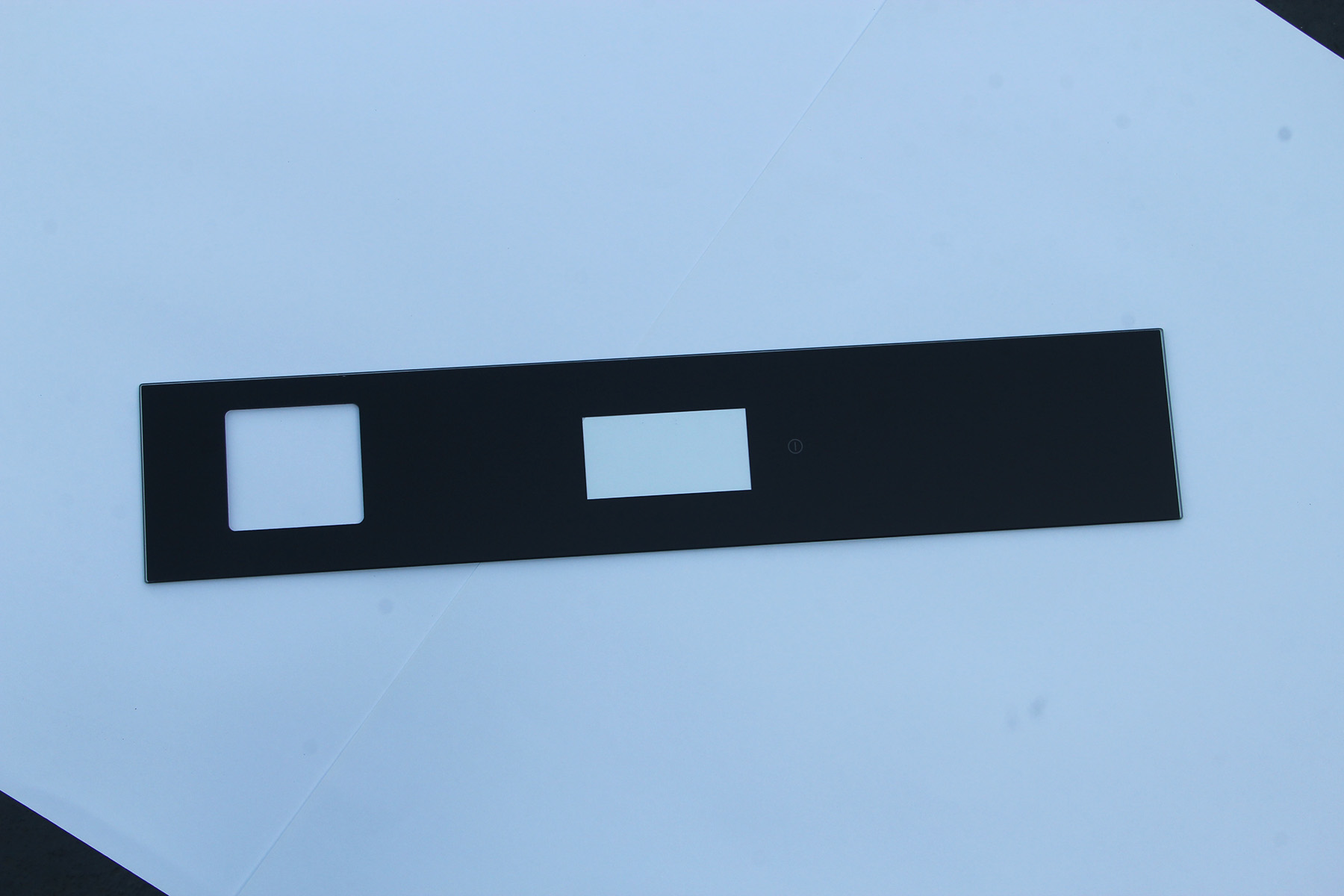
A microwave oven control panel is the operating interface located on the front of a microwave oven. It allows users to select cooking programs, adjust cooking time, control power settings, and monitor the cooking process.
The control panel communicates with the microwave oven’s internal control board to execute user instructions. When a user presses a button or touches the screen, the panel sends signals to the electronic control system, which then activates functions such as heating, defrosting, or cooking programs.
A typical microwave oven control panel assembly includes:
Control buttons or touch keys
Digital display screen
Printed circuit board (PCB)
Microcontroller
Function indicators
Connecting cables
Protective panel cover
The main function of the Microwave Control Panel is to receive input from users.
Depending on the design, users can operate the microwave through:
Mechanical buttons
Membrane switches
Touch keys
Capacitive touch screens
Digital displays
When an operation is selected, the control panel sends electronic signals to the main control board.
Inside the control panel, the PCB and microcontroller process user commands and determine the required operation.
The system controls functions such as:
Cooking time
Microwave power level
Heating mode
Defrost settings
Auto cooking programs
After processing the input signal, the control system activates different components, including:
Magnetron
Fan motor
Turntable motor
Heating elements
Safety switches
This allows the microwave oven to perform the selected cooking function.
The interface is the part users interact with directly.
Common types include:
Mechanical Button Control Panel
Traditional microwave ovens often use physical buttons or knobs because they are durable and easy to operate.
Membrane Switch Control Panel
A membrane keypad uses layered materials to provide a slim and cost-effective control solution.
Touch Screen Control Panel
Advanced microwave ovens may use touch screens to provide a modern appearance and multiple smart functions.
The display shows important information, including:
Cooking time
Power level
Cooking mode
Remaining time
Error messages
Common display technologies include:
LED display
LCD display
Touch display
The PCB is the electronic core of the microwave oven control panel.
It controls communication between the user interface and microwave components.
The PCB is responsible for:
Signal processing
Program control
Power management
Safety monitoring
The microcontroller works as the “brain” of the control panel.
It stores cooking programs and manages different microwave functions according to user input.
Mechanical control panels use physical knobs and switches.
Advantages:
Simple structure
Easy operation
High durability
Lower manufacturing cost
They are commonly used in basic microwave ovens.
Digital control panels use electronic buttons and display systems.
Advantages:
Accurate time control
Multiple cooking programs
Better user experience
Modern appearance
They are widely used in household and commercial microwave ovens.
Touch control panels use touch-sensitive technology to provide a smooth and modern interface.
Features include:
Easy cleaning
Stylish design
Smart functions
Improved user interaction
Smart control panels integrate advanced technologies such as:
Wi-Fi connection
Mobile app control
Voice control
Sensor cooking
They are commonly used in high-end smart kitchen appliances.
Modern microwave oven control panels often include preset programs for:
Popcorn
Pizza
Vegetables
Meat
Beverage heating
Defrosting
These functions simplify operation for users.
Users can select different microwave power levels according to cooking requirements.
Many microwave control panels include safety lock functions to prevent accidental operation.
Advanced control panels can work with sensors to automatically adjust cooking time and power based on food conditions.
Smart electronic control systems help optimize energy usage and improve appliance efficiency.
The outer frame is usually made from durable plastic materials that provide:
Insulation
Impact resistance
Lightweight structure
High-end microwave ovens may use glass touch panels because of their:
Premium appearance
Easy cleaning
Scratch resistance
Internal components include:
PCB boards
Integrated circuits
Sensors
Connectors
These components ensure accurate control and reliable operation.
The most common application is residential microwave ovens used for:
Food heating
Cooking
Defrosting
Commercial microwave ovens in restaurants and hotels require durable control panels for frequent operation.
Modern smart kitchens use advanced microwave control panels with digital interfaces and connected functions.
Many appliance manufacturers use customized microwave oven control panel assemblies designed according to specific product requirements.
A well-designed control panel makes microwave operation easier and more convenient.
High-quality electronic components improve durability and reduce failures.
Advanced control systems provide safety features such as child locks and error detection.
Manufacturers can customize:
Button layout
Display design
Panel materials
Interface functions
Appearance styles
according to customer requirements.
A professional manufacturer should have experience in producing electronic control panels for home appliances.
Reliable suppliers should provide strict quality control for:
Electronic components
Circuit boards
Touch sensitivity
Product durability
OEM and ODM manufacturers can provide customized microwave control panels based on different appliance designs.
Quality microwave oven control panels should pass tests for:
Electrical safety
Temperature resistance
Button durability
Signal stability
A microwave oven control panel is the interface used to control microwave functions, including cooking time, power level, and heating programs.
The control panel receives user commands, processes signals through the PCB and microcontroller, and sends instructions to the microwave oven components.
Common types include mechanical control panels, digital control panels, touch control panels, and smart microwave control panels.
Yes. If the control panel is damaged, it can usually be replaced with a compatible replacement part.
Microwave control panels commonly use plastic housings, glass touch panels, PCB boards, electronic components, and protective layers.

Tel/Whatsapp:+86 13423078888
E-mail:chloe_mo@wchtemperglass.com
Address:Yuan He Road North, Xiang Xi Industrial Zone, Shipai Town, Dongguan City, Guangdong Province, China


Privacy Policy Cookie Policy Terms and Conditions
Copyright © 2025 W.C.H Temper Glass Co., Ltd. All rights reserved.