
 English

Blog
Provide One-Stop Customized Services
WCH is dedicated to providing high-precision and high-quality
tempered glass customization services for home appliance manufacturers.


2026-09-09 18:13:44
Microwave Oven Door Glass is a specially designed glass component used in microwave oven doors to provide a clear viewing area while helping maintain the safety and functional performance of the appliance. Unlike ordinary household glass, microwave oven door glass is designed as part of a specialized door structure that supports heat resistance, impact resistance, visibility, and microwave shielding requirements.
As an important component of a microwave oven door, high-quality Microwave Glass needs to work reliably under repeated heating and cooling cycles. It is commonly combined with a perforated metal mesh or other shielding structure to allow users to observe food while helping prevent microwave energy from escaping the oven cavity.
For appliance manufacturers, distributors, and replacement-part suppliers, customized microwave oven door glass can be manufactured according to different oven models, door structures, dimensions, thicknesses, and design requirements.
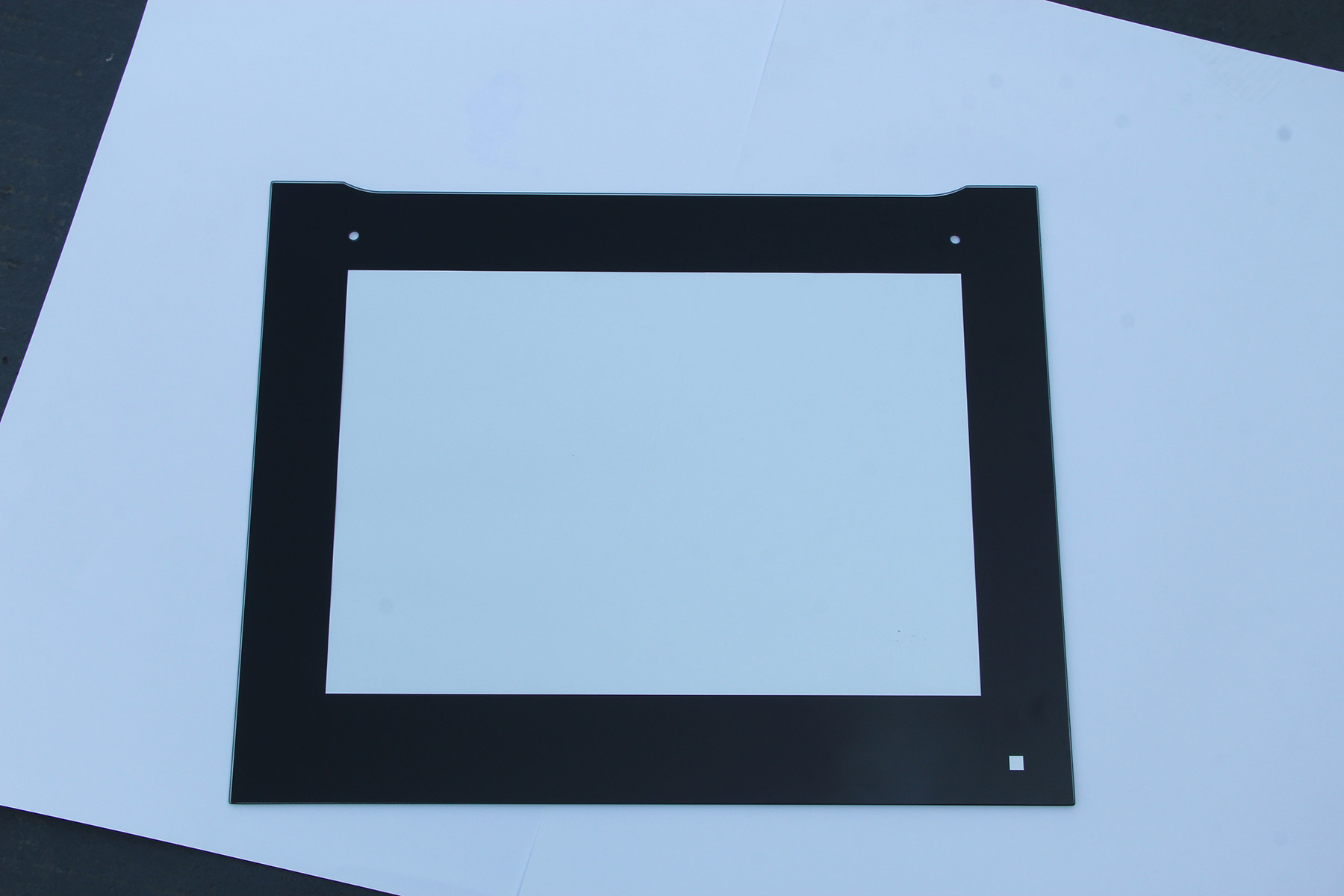
Microwave oven door glass is the glass panel installed inside a microwave oven door. It provides a transparent viewing surface while working together with the door's shielding structure.
The glass itself is not normally the only component responsible for microwave shielding. A microwave oven door typically uses multiple layers and a conductive mesh or screen around the viewing area. This integrated construction allows users to see the food inside while maintaining the required shielding performance of the appliance.
A well-designed microwave Oven Glass door can provide several important functions:
Clear visibility of food during cooking
Heat-resistant performance
Good thermal stability
Impact resistance
Reliable performance during repeated heating cycles
Compatibility with microwave door structures
Smooth and attractive appearance
Easy integration into appliance assemblies
The exact performance requirements depend on the microwave oven design, glass construction, and applicable safety standards.
Different microwave ovens may require different glass specifications. However, quality microwave oven door glass generally focuses on durability, thermal performance, optical clarity, and dimensional accuracy.
Microwave ovens operate at elevated temperatures during cooking. Therefore, the glass used in the door needs to withstand the thermal conditions associated with normal operation.
Good Microwave Door Glass should maintain its structural integrity during repeated heating and cooling cycles.
Repeated temperature changes can create thermal stress in glass. Properly selected and processed microwave glass helps reduce the risk of damage caused by thermal cycling.
The viewing panel should provide sufficient visibility so users can observe food without opening the microwave door.
Depending on the product design, the glass may have different levels of transparency, color, or surface treatment.
The microwave oven door is opened and closed frequently, so its glass panel needs to withstand normal mechanical handling.
Suitable glass processing and door construction can help improve the overall durability of the microwave oven glass door.
Accurate dimensions are essential when installing glass into a microwave door assembly. The glass needs to match the required length, width, thickness, edge configuration, and mounting structure.
For OEM applications, custom microwave oven door glass can be manufactured according to technical drawings or samples.
A microwave oven door is generally more complex than a simple glass panel. Its construction may include several components designed to provide visibility, structural support, and microwave shielding.
The microwave oven glass provides the transparent viewing surface. Its material, thickness, shape, and processing method depend on the specific appliance design.
A conductive metal mesh or screen is commonly incorporated into the microwave oven door. The small openings allow visible light to pass through while helping limit the transmission of microwave energy.
This means the glass and shielding mesh work together rather than relying on ordinary glass alone for microwave containment.
The door frame supports the glass and other components while helping maintain the structural integrity of the complete microwave door.
Some microwave ovens use multilayer door constructions. The specific configuration depends on the appliance manufacturer and product model.
Different microwave oven models may use different glass configurations depending on their design and performance requirements.
Flat microwave oven door glass is commonly used in conventional microwave oven doors. It has a simple planar design and can be manufactured according to the required dimensions.
Some modern microwave ovens may use curved or specially shaped viewing panels to match the appliance's exterior design.
Curved microwave oven glass can provide a more distinctive appearance while requiring more specialized forming and processing.
Tempered glass can offer improved mechanical strength compared with ordinary annealed glass. Depending on the specific microwave design, tempered glass may be considered for applications requiring enhanced durability.
The suitability of a particular glass type should always be verified against the appliance manufacturer's design and safety requirements.
For OEM and replacement applications, custom microwave oven door glass can be produced according to:
Glass dimensions
Thickness requirements
Shape
Edge processing
Surface finish
Color or appearance
Mounting requirements
Door structure
Customer drawings or samples
The production of microwave oven glass door components generally involves several precision manufacturing processes.
Glass is first cut according to the required dimensions and shape. CNC or other precision cutting methods may be used depending on the design.
The glass edges can be processed to meet the requirements of the microwave door assembly. Edge grinding and polishing can help improve edge quality and handling safety.
If the design requires holes, slots, or other features, additional precision processing may be performed.
Depending on the selected glass type and application requirements, heat treatment such as tempering may be applied to improve mechanical performance.
Finished microwave oven door glass should be inspected for dimensions, appearance, edge quality, surface defects, and other customer-specific requirements.
For OEM production, inspection procedures can be established according to drawings, samples, technical specifications, and applicable standards.
Microwave oven door glass is primarily used in household and commercial microwave appliances.
Typical applications include:
Household microwave ovens
Built-in microwave ovens
Countertop microwave ovens
Commercial microwave ovens
Combination microwave ovens
Microwave replacement doors
OEM microwave appliance production
The glass can be designed for different appliance sizes and door configurations.
Selecting the correct microwave glass door requires more than simply matching the appearance of an existing panel.
Length, width, thickness, corner radius, and other dimensions should be confirmed before production.
The glass must be compatible with the complete microwave door assembly, including the frame, mesh, seals, and mounting method.
Depending on the application, manufacturers may choose different glass types and processing methods according to mechanical, thermal, and design requirements.
For appliance manufacturers, customized microwave oven door glass can help match different microwave models and product designs.
Providing a technical drawing, physical sample, or detailed specifications can make customization more accurate.
Custom microwave oven door glass offers several advantages for appliance manufacturers and replacement-part suppliers.
Customized dimensions allow the glass to match specific microwave oven models and door assemblies.
Manufacturers can develop different shapes, sizes, finishes, and appearances according to product requirements.
For large-volume OEM orders, standardized production and inspection processes can help maintain consistent dimensions and quality.
Custom glass can also be produced for replacement applications where standard glass panels may not fit a specific microwave oven model.
Microwave oven door glass is the glass panel installed in a microwave oven door. It provides visibility and works with the door's shielding structure to support the safe operation of the appliance.
Ordinary household glass should not be substituted without confirming compatibility with the microwave oven's original design and safety requirements. Microwave oven doors use specialized constructions and shielding systems.
Suitable microwave glass is designed to withstand the thermal conditions associated with normal microwave operation. The exact temperature resistance depends on the glass type and construction.
Yes. Custom microwave oven door glass can be manufactured according to dimensions, thickness, shape, edge processing, drawings, samples, and other OEM requirements.
The glass itself should not be considered the primary microwave shielding component. Microwave oven doors typically use a conductive metal mesh or screen as part of the shielding structure.
Manufacturers generally need information such as glass dimensions, thickness, shape, edge requirements, door structure, drawings, physical samples, and required quantity. Application-specific requirements should also be confirmed before production.
Microwave Oven Door Glass is an important component of modern microwave appliances, providing a clear viewing area while integrating with the complete door structure. High-quality microwave oven glass should offer suitable thermal stability, durability, dimensional accuracy, and appearance for the intended application.
For microwave oven manufacturers, distributors, and replacement-part suppliers, custom microwave oven door glass can be produced according to different models, dimensions, shapes, and door structures. Working with an experienced glass manufacturer can help ensure that the finished product matches the technical and assembly requirements of the microwave oven.

Tel/Whatsapp:+86 13423078888
E-mail:chloe_mo@wchtemperglass.com
Address:Yuan He Road North, Xiang Xi Industrial Zone, Shipai Town, Dongguan City, Guangdong Province, China


Privacy Policy Cookie Policy Terms and Conditions
Copyright © 2025 W.C.H Temper Glass Co., Ltd. All rights reserved.