
 English

Blog
Provide One-Stop Customized Services
WCH is dedicated to providing high-precision and high-quality
tempered glass customization services for home appliance manufacturers.


2026-09-28 16:29:49
Printed Glass is a decorative and functional glass solution that uses advanced printing technology to apply patterns, images, colors, graphics, or other designs directly onto glass surfaces. It can be customized for different architectural, interior, commercial, and decorative applications.
With Digital Glass Printing, manufacturers can reproduce detailed graphics, multiple colors, gradients, textures, and customized designs on glass. When combined with heat-treated glass, Printed Tempered Glass provides both decorative effects and the performance characteristics required for many architectural applications.
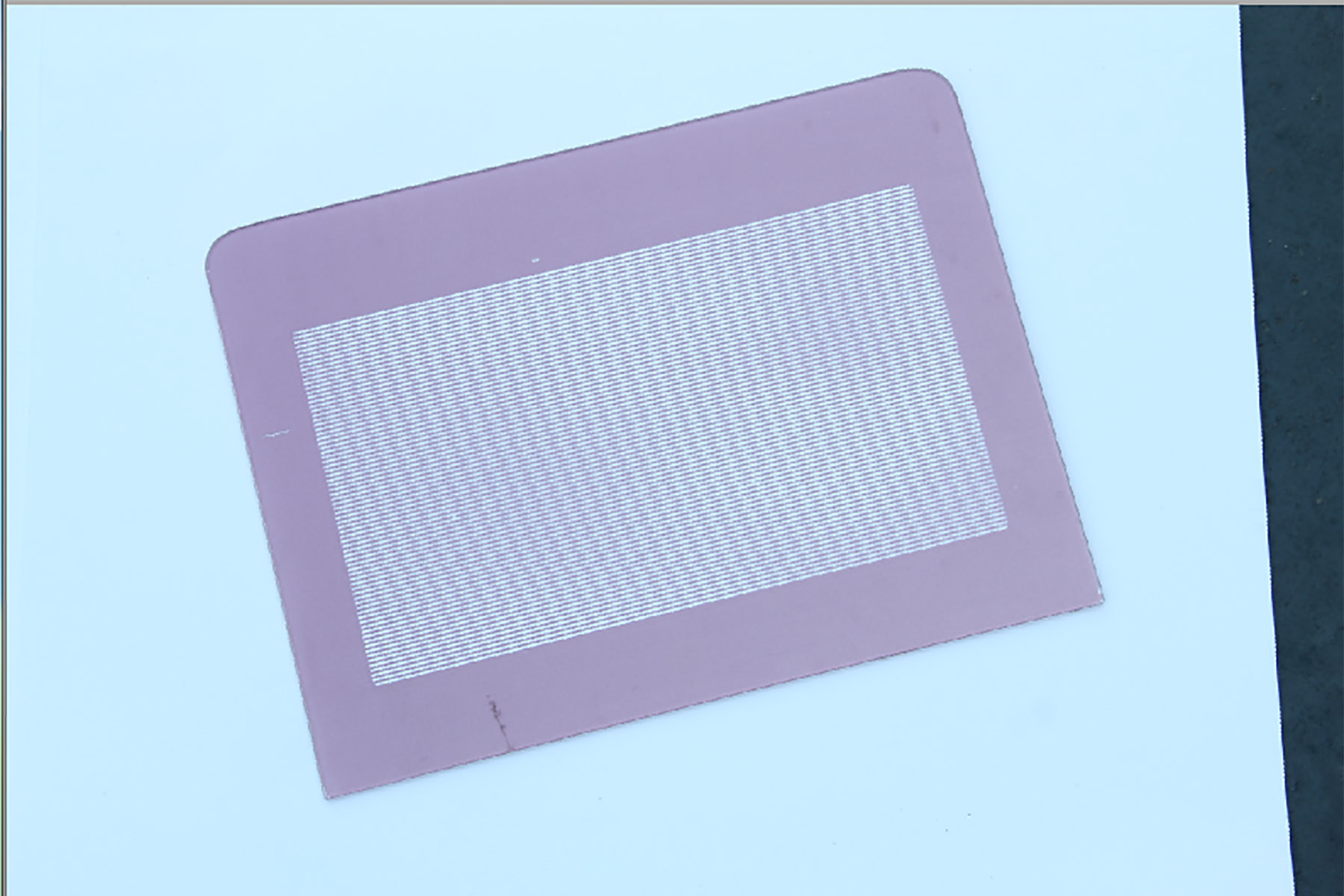
Printed Glass refers to glass with a digitally or traditionally printed design applied to its surface. Depending on the printing process and application requirements, the printed pattern can cover part or all of the glass surface.
Common designs include:
Solid colors
Patterns
Logos
Images
Decorative graphics
Textures
Geometric designs
Custom artwork
Privacy patterns
Printed glass can be produced in different sizes, thicknesses, colors, and configurations according to project requirements.
Custom Printing Glass allows customers to create glass products according to their own artwork, patterns, colors, dimensions, and application requirements.
Customers can provide:
Artwork or images
Logos
Brand colors
Pattern designs
Glass dimensions
Glass thickness
Required opacity
Application requirements
A professional glass manufacturer can then adjust the artwork and printing parameters according to the selected glass type and production process.
This makes Custom Glass Printing suitable for projects where standard decorative glass cannot provide the required visual effect.
Digital Glass Printing uses digital printing technology to transfer graphics directly onto the glass surface. Unlike traditional methods that may require fixed screens or repetitive patterns, digital printing allows different designs to be produced with greater flexibility.
Key advantages include:
Flexible graphic customization
Detailed image reproduction
Multiple color options
Gradient and tonal effects
Variable designs within the same project
Suitable for short production runs
Easy design changes
Digital Printing on Glass is particularly useful for architectural projects, interior decoration, commercial spaces, and customized glass installations.
Digital Printing on Glass can be used to create both decorative and functional surface designs.
Depending on the printing system and glass specification, manufacturers can produce detailed patterns while maintaining the transparency, translucency, or opacity required for the application.
The printing process may involve:
Preparing the glass surface
Creating and checking the digital artwork
Selecting suitable printing parameters
Applying the ceramic or suitable glass-printing ink
Curing or firing according to the selected process
Inspecting the printed surface
Performing additional glass processing when required
The exact process depends on the printing technology, ink system, glass type, and final application.
Printed Tempered Glass combines decorative printing with the safety characteristics of Tempered Glass.
Tempered glass is heat-treated to increase its mechanical strength and thermal resistance compared with ordinary annealed glass. When a printed design is combined with tempered glass, the result can be used in applications requiring both customized appearance and safety glass performance.
Printed tempered glass can be used for:
Shower enclosures
Glass partitions
Interior doors
Retail displays
Wall decoration
Kitchen backsplashes
Commercial interiors
Architectural installations
The printing process and heat-treatment sequence should be selected according to the ink technology and product requirements.
Digital Printing on Toughened Glass provides a way to combine customized digital graphics with toughened safety glass.
Toughened glass is commonly used where enhanced mechanical strength and thermal performance are required. Digital printing allows manufacturers to add customized visual elements without relying only on conventional transparent or plain glass surfaces.
Applications may include architectural façades, partitions, doors, commercial interiors, furniture, and decorative installations.
When specifying Digital Printing on Toughened Glass, important factors include glass thickness, dimensions, color requirements, image resolution, printing coverage, edge processing, and heat-treatment requirements.
A Tempered Glass Print can be created using suitable printing technologies before or during the glass production process. The final product combines a decorative printed surface with tempered glass.
Depending on the design, a Tempered Glass Print can provide:
Customized appearance
Brand or logo reproduction
Decorative patterns
Privacy effects
Light-control effects
Interior design elements
For projects involving safety glazing, the complete glass specification should be evaluated to ensure that the printing process and glass treatment are compatible with the intended application.
Printed Toughened Glass is suitable for projects that require customized graphics together with the characteristics of toughened safety glass.
It can be manufactured with different printing patterns, colors, and levels of coverage. Depending on the project, customers can choose transparent, translucent, opaque, or partially printed designs.
Common applications include:
Printed toughened glass can be used for façades, entrance areas, partitions, balustrades, and other architectural elements.
It can be used for feature walls, room dividers, doors, ceilings, and decorative panels.
Retail stores, hotels, restaurants, offices, and exhibition spaces can use custom printed glass for branding and interior decoration.
Printed glass can be used for backsplashes, shower screens, partitions, and other interior surfaces.
Custom printed glass can also be incorporated into furniture, display cabinets, tables, and commercial display systems.
Digital printing makes it possible to reproduce customized graphics, images, logos, and patterns according to individual project requirements.
Different designs can be produced without requiring a single fixed pattern across every glass panel, making digital printing suitable for customized projects.
Digital printing technology can reproduce complex images, fine lines, and multi-color designs when the appropriate equipment and printing parameters are used.
Depending on the equipment, digital printing can be applied to large glass panels for architectural and interior projects.
Printed glass can be further processed into products such as tempered, laminated, insulated, or other glass configurations when the selected printing system is compatible with the required process.
When ordering Custom Glass Printing, customers should provide the basic product and design requirements.
Select the appropriate glass according to the application, such as clear glass, low-iron glass, tempered glass, or other suitable glass types.
Provide the required length, width, and thickness of each glass panel.
Submit logos, images, patterns, or other artwork in an appropriate digital format.
Determine whether the design should cover the entire glass surface, a specific area, or selected sections.
Specify the required colors, transparency, opacity, or other visual effects.
Depending on the application, additional processes such as tempering, edge polishing, drilling, laminating, or insulating may be required.
Custom Glass Printing provides more design flexibility than standard decorative glass products. It allows architects, designers, brands, and manufacturers to create glass surfaces that match specific visual and functional requirements.
Custom printed glass can help with:
Architectural decoration
Brand presentation
Interior customization
Privacy design
Pattern creation
Visual differentiation
Project-specific dimensions
For commercial and architectural projects, printed glass can also be designed to maintain a consistent visual style across multiple glass panels.
Printed Glass is glass with customized graphics, colors, patterns, images, or other designs applied to its surface using a suitable glass printing technology.
Digital Glass Printing is a printing process that uses digital technology to apply customized graphics directly onto glass. It is suitable for detailed images, patterns, logos, and variable designs.
Yes. Custom Printing Glass can be produced according to specific dimensions, artwork, colors, patterns, printing coverage, and glass specifications.
Printed Tempered Glass combines a printed design with heat-treated tempered glass, while Printed Glass is a broader term that can refer to printed glass products using different glass types.
Yes. Digital Printing on Toughened Glass can be used to apply customized graphics and images when the selected printing technology and glass-processing sequence are compatible.
Printed Toughened Glass can be used for many architectural and interior applications, including partitions, doors, façades, decorative panels, and commercial interiors. The final glass specification should be selected according to the project's safety and performance requirements.
Customers should normally provide the glass type, dimensions, thickness, artwork, colors, printing coverage, quantity, and intended application. Additional requirements such as tempering, laminating, drilling, or edge processing should also be specified when needed.

Tel/Whatsapp:+86 13423078888
E-mail:chloe_mo@wchtemperglass.com
Address:Yuan He Road North, Xiang Xi Industrial Zone, Shipai Town, Dongguan City, Guangdong Province, China


Privacy Policy Cookie Policy Terms and Conditions
Copyright © 2025 W.C.H Temper Glass Co., Ltd. All rights reserved.