
 English

Blog
Provide One-Stop Customized Services
WCH is dedicated to providing high-precision and high-quality
tempered glass customization services for home appliance manufacturers.


2026-09-28 16:45:14
Tempered Glass for Oven Door is specially processed safety glass designed for oven door applications where resistance to heat, thermal stress, and mechanical impact is important. Oven Door Glass needs to maintain reliable performance under repeated heating and cooling cycles while providing clear visibility of the food inside the oven.
As an experienced tempered glass manufacturer, a professional supplier can provide customized glass solutions according to oven structure, dimensions, thickness, edge processing, and other application requirements.
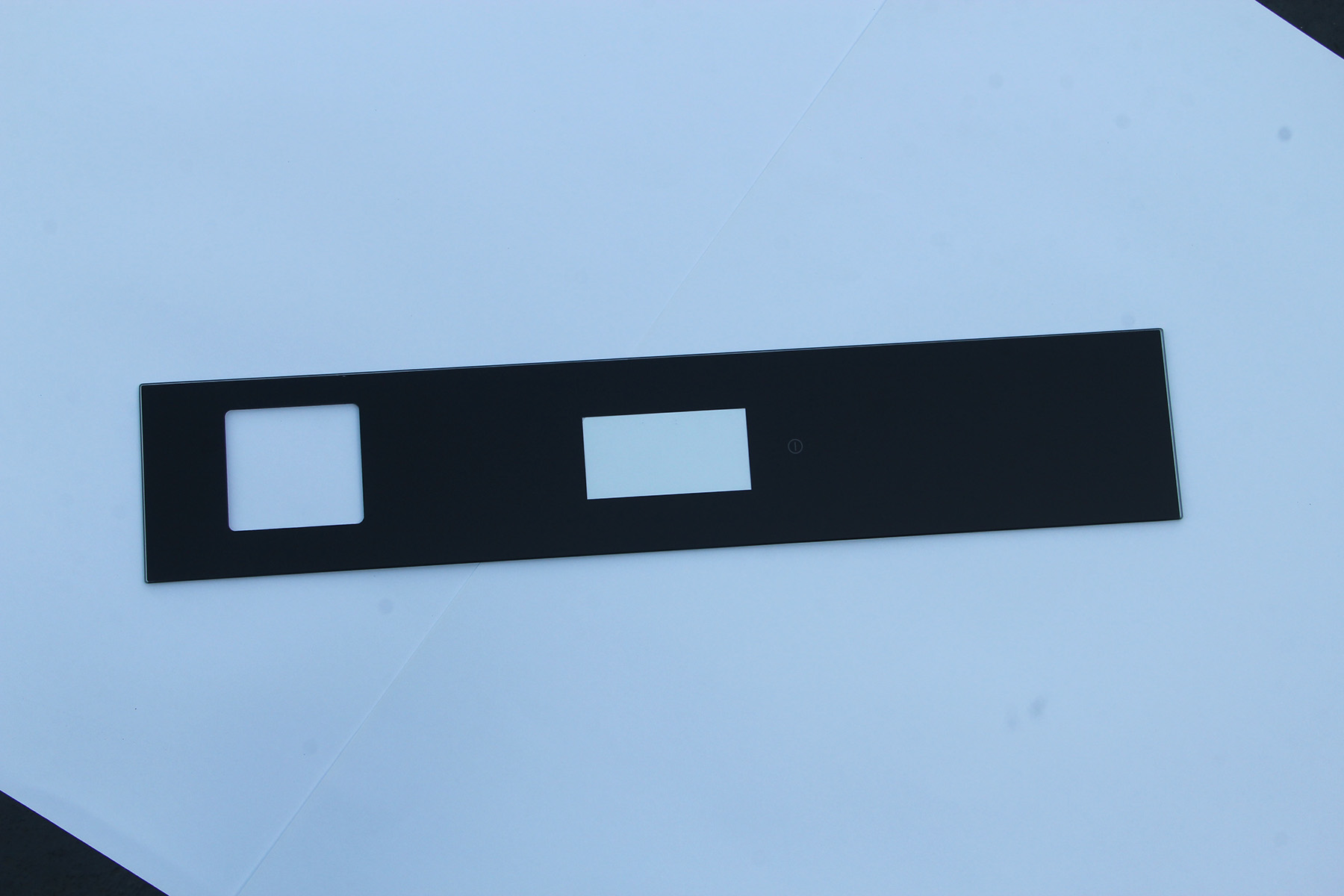
Tempered Glass for Oven Door is glass that has undergone a controlled heat-treatment process to improve its mechanical strength and thermal resistance compared with ordinary annealed glass.
During production, the glass is heated to a high temperature and then rapidly cooled. This process creates compressive stress on the glass surface, increasing its resistance to mechanical and thermal stresses.
For oven applications, the glass specification needs to be selected according to the actual operating temperature, door structure, heating conditions, and safety requirements.
Quality Tempered Glass for oven doors needs to provide consistent optical quality, dimensions, strength, and thermal performance.
Important quality factors include:
Consistent glass thickness
Accurate dimensions
Smooth and properly processed edges
Uniform tempering
Good optical clarity
Controlled surface quality
Stable thermal performance
Reliable inspection procedures
For appliance manufacturers, consistent glass quality is especially important because oven doors are repeatedly exposed to heating and cooling during normal operation.
Oven doors are exposed to temperature changes, mechanical movement, and regular handling. The glass therefore needs to meet the requirements of the appliance design.
Tempered glass generally has higher mechanical strength than annealed glass of the same thickness, making it suitable for applications where improved resistance to impact and handling is required.
Oven door glass can experience repeated temperature changes during cooking. Properly manufactured tempered glass can provide improved resistance to thermal stress compared with ordinary annealed glass.
When properly tempered glass breaks, it typically fractures into smaller granular pieces rather than large sharp shards. This is one of the important safety characteristics of tempered glass.
Suitable oven door glass can provide clear visibility of the cooking area, allowing users to monitor food without opening the oven door.
Tempered Glass Production involves several controlled manufacturing steps to achieve the required glass dimensions, surface quality, and tempering performance.
A typical production process includes:
The glass is first cut according to the required dimensions. Accurate cutting is important because tempered glass generally cannot be cut after the tempering process.
The glass edges can be ground, polished, or processed according to the oven door design. Proper edge treatment helps reduce edge defects and supports safe handling.
If the oven door structure requires holes, slots, notches, or other special features, these processes are normally completed before tempering.
The glass surface is cleaned and inspected before entering the tempering process.
The glass is heated to the required temperature under controlled production conditions.
The heated glass is rapidly cooled using controlled air flow. This creates the stress distribution required for the tempered glass.
Finished glass is inspected for dimensions, appearance, surface quality, and other customer specifications.
Tempered Glass Manufacturing requires precise control of both glass processing and heat treatment.
For oven door applications, manufacturers need to consider factors such as:
Glass thickness
Glass dimensions
Edge quality
Hole and notch positions
Heating conditions
Cooling conditions
Flatness
Optical quality
Final application requirements
A professional manufacturing process helps maintain consistency between production batches, which is particularly important for appliance manufacturers producing oven doors in large quantities.
Different oven models may use different door structures and glass dimensions. Therefore, Tempered Glass for Oven Door can be customized according to the customer's drawings and specifications.
Customization may include:
Glass length and width
Glass thickness
Edge polishing
Corner shapes
Holes and slots
Special cutouts
Surface treatment
Printing or decorative patterns
Packaging requirements
Customers can provide technical drawings, samples, CAD files, or dimensional specifications for evaluation.
A professional tempered glass factory should have suitable equipment and quality control procedures for glass cutting, edge processing, drilling, washing, tempering, inspection, and packaging.
When selecting a factory, buyers can consider:
Production equipment
Tempering furnace capability
Glass processing capacity
Dimensional accuracy
Quality inspection procedures
Production capacity
Customization capability
Packaging and shipping experience
For oven door glass, the factory should also understand the specific requirements of appliance glass rather than treating the product as a general architectural glass application.
A reliable tempered glass supplier should be able to provide stable product quality and consistent production according to customer specifications.
For B2B buyers, important considerations include:
Confirm glass type, thickness, dimensions, edge processing, holes, and other technical requirements.
Ask about dimensional inspection, surface inspection, tempering quality, and batch control.
Check whether the supplier can manufacture glass according to drawings or samples.
For appliance manufacturers, stable production capacity is important for continuous orders and mass production.
Oven door glass needs suitable protective packaging to reduce the risk of damage during transportation.
For international buyers, experience with export packaging, documentation, and international shipping can simplify the purchasing process.
A China tempered glass supplier can provide customized tempered glass for appliance manufacturers, distributors, and international buyers.
When sourcing from a tempered glass manufacturer in China, buyers can evaluate the supplier based on manufacturing capabilities, quality control, customization experience, production capacity, and export experience.
For oven door applications, it is useful to provide complete technical information before quotation, including:
Glass dimensions
Thickness
Quantity
Glass configuration
Edge processing
Holes or cutouts
Printing requirements
Packaging requirements
Intended oven application
This allows the manufacturer to provide a more accurate production proposal and quotation.
An export tempered glass factory needs to consider not only manufacturing quality but also international packaging and delivery requirements.
For overseas orders, suitable packaging can help protect glass products during handling and transportation. Depending on order quantity and shipping method, glass may be packed using protective materials, cartons, wooden crates, or other appropriate packaging solutions.
An experienced export supplier can also coordinate production schedules, quality inspections, packaging, and shipping documentation for international customers.
Tempered Glass for Oven Door can be used in various types of cooking appliances, depending on the glass specification and appliance design.
Applications may include:
Built-in ovens
Electric ovens
Gas ovens
Household ovens
Commercial cooking equipment
Kitchen appliances
Oven door assemblies
The exact glass structure should always be selected according to the appliance manufacturer's design and applicable safety requirements.
When selecting a tempered glass manufacturer, buyers can evaluate several factors.
Manufacturing Capability: Check whether the factory has suitable cutting, edge-processing, drilling, tempering, and inspection equipment.
Quality Control: Confirm how dimensions, surface quality, tempering performance, and finished products are inspected.
Customization: Make sure the manufacturer can produce the required shape, size, thickness, and processing details.
Production Capacity: For large-volume appliance production, stable capacity and lead times are important.
Packaging: Confirm that the supplier has appropriate packaging methods for domestic and international transportation.
Technical Communication: Clear communication of drawings, specifications, samples, and production requirements can help reduce manufacturing errors.
Tempered Glass for Oven Door is heat-treated safety glass designed for oven door applications. It provides improved mechanical strength and resistance to thermal stress compared with ordinary annealed glass.
Suitable tempered glass can be used for oven doors when its thickness, dimensions, tempering characteristics, and thermal performance are appropriate for the specific appliance design.
Tempered Glass Manufacturing generally involves cutting and processing the glass before heating it to a controlled temperature and rapidly cooling it to create the required stress distribution.
Yes. Tempered Glass for Oven Door can be customized in terms of dimensions, thickness, shape, edge processing, holes, cutouts, printing, and other specifications according to the oven design.
Customers should provide the glass dimensions, thickness, shape, edge requirements, holes or cutouts, quantity, drawings or samples, and any special processing requirements.
When choosing a tempered glass supplier, consider product quality, manufacturing capabilities, customization, quality control, production capacity, packaging, and export experience.
Yes. A China tempered glass supplier can manufacture customized oven door glass for international appliance manufacturers and buyers. Technical drawings and product specifications should be confirmed before production.

Tel/Whatsapp:+86 13423078888
E-mail:chloe_mo@wchtemperglass.com
Address:Yuan He Road North, Xiang Xi Industrial Zone, Shipai Town, Dongguan City, Guangdong Province, China


Privacy Policy Cookie Policy Terms and Conditions
Copyright © 2025 W.C.H Temper Glass Co., Ltd. All rights reserved.