
 English

Blog
Provide One-Stop Customized Services
WCH is dedicated to providing high-precision and high-quality
tempered glass customization services for home appliance manufacturers.


2026-08-21 18:14:37
Choosing the right glass type for an oven door comes down to three decisions: ruling out standard float glass in favor of Tempered Glass for safety and thermal shock resistance, selecting the right thickness for the door position — inner or outer panel — and deciding whether a Low-E coating is worth the added cost for your product line's energy efficiency claims. Getting the first decision wrong is a safety liability; the other two are performance and positioning decisions that affect cost and how your finished appliance competes in its market.
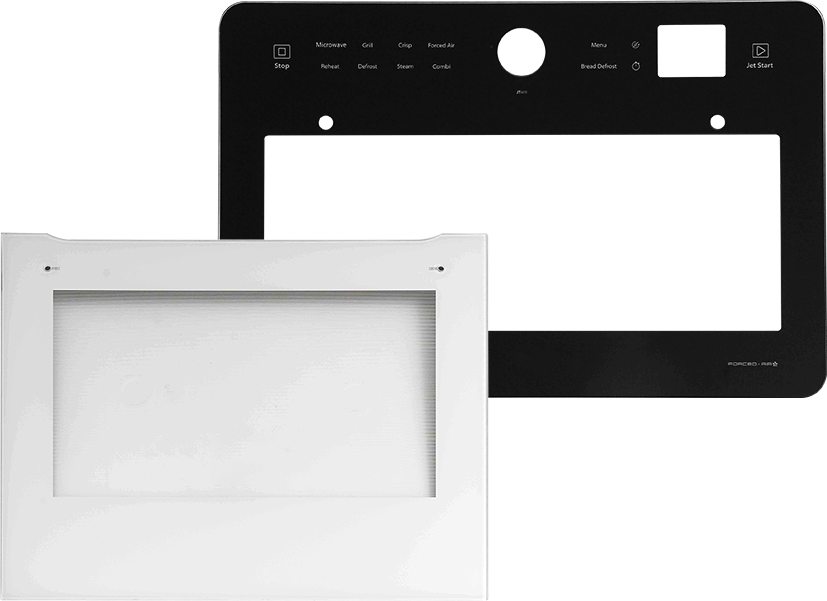
Float glass is standard annealed glass — the same base material used in most windows and mirrors — and it isn't heat-treated for strength or thermal shock resistance. Used on an oven door, float glass is prone to cracking under the repeated heating and cooling cycles an oven goes through, and if it breaks, it fractures into large, sharp shards rather than failing safely. Tempered glass is heat-treated specifically to withstand thermal cycling and, if it does break, fractures into small, relatively blunt granules — which is why tempered glass is the standard specification for oven door applications rather than float glass, regardless of cost savings float glass might offer upfront.
Tempered Oven Door Glass is typically available in 4mm, 6mm, 8mm, 10mm, and 12mm thicknesses. Outer door panels — the ones most exposed to handling, cleaning, and accidental impact — generally call for a thicker specification within that range, while inner door panels, positioned closer to the heat source but with less direct handling exposure, are sized more around thermal performance than impact resistance. Confirm with your supplier which thickness they recommend for each specific panel position in your door assembly rather than specifying one thickness across both inner and outer glass, since the two panels are doing different jobs.
Low-E (low emissivity) coated glass is designed to reflect infrared heat back into the oven cavity while still allowing visible light through, so the cook can see inside without as much heat escaping through the door. This makes Low-E glass a relevant option when your product line is positioned on energy efficiency — it directly supports lower energy consumption claims and can reduce the outer glass surface temperature, which also has a secondary safety benefit. The tradeoff is added cost over standard tempered glass, so this decision usually comes down to whether your target market and price tier support marketing an energy-efficiency feature, not just whether the coating is technically available.
Can they confirm the glass is tempered, not float glass, with documentation of the tempering process?
What thickness do they recommend separately for the inner and outer door panels in your specific door assembly?
Is Low-E coating available for your target thickness and panel size, and what's the cost difference versus standard tempered glass?
Can they support custom cutting and edge polishing to match your exact oven door dimensions?
What certifications (ISO 9001, ISO 14000, or others relevant to your target market) can they document?
If you have your door dimensions and specifications ready, send them directly for a quote. For a broader look at the glass types used across oven doors, see our guide to glass used on oven doors.
It's not recommended. Float glass isn't heat-treated for thermal shock resistance and breaks into sharp shards if it fails. Tempered glass is the standard for oven door applications because it withstands thermal cycling and breaks into small, safer granules if it does fail.
Common thicknesses range from 4mm to 12mm. Outer door panels typically use a thicker specification for impact resistance, while inner panels are sized more around thermal performance. Confirm the recommended thickness for each panel position separately.
Low-E coating reflects infrared heat back into the oven cavity while maintaining visibility, supporting lower energy consumption and reducing outer glass surface temperature. It costs more than standard tempered glass, so it's most worth it when your product line markets energy efficiency as a feature.
Outer door glass is more exposed to handling and impact, generally calling for a thicker specification. Inner door glass sits closer to the heat source and is specified more around thermal performance than impact resistance. Both are typically tempered, but the recommended thickness often differs between the two.

Tel/Whatsapp:+86 13423078888
E-mail:chloe_mo@wchtemperglass.com
Address:Yuan He Road North, Xiang Xi Industrial Zone, Shipai Town, Dongguan City, Guangdong Province, China


Privacy Policy Cookie Policy Terms and Conditions
Copyright © 2025 W.C.H Temper Glass Co., Ltd. All rights reserved.