
 English

Blog
Provide One-Stop Customized Services
WCH is dedicated to providing high-precision and high-quality
tempered glass customization services for home appliance manufacturers.


2026-10-08 14:21:10
Glass for Oven Door plays an important role in the safety, thermal performance, and visibility of an oven. Unlike ordinary household glass, Oven Door Glass must withstand high temperatures, repeated heating and cooling cycles, and potential physical impacts.
Oven door glass is typically made of heavy-duty tempered glass designed to handle high heat, rapid temperature changes, and physical impacts. Depending on the oven design and application, multiple glass layers may also be used to improve thermal insulation and safety.
For appliance manufacturers, choosing the right Oven Door Glass is essential for maintaining reliable performance throughout the product's service life.
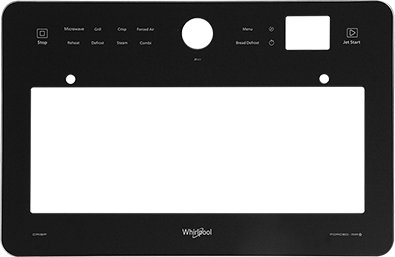
Glass for Oven Door is specially manufactured glass designed for use in oven doors. It allows users to see the food inside while helping contain heat within the oven chamber.
Unlike standard architectural or household glass, Oven Glass must be able to operate under elevated temperatures and repeated thermal cycling.
A typical oven door may contain several components, including:
Outer glass panel
Inner glass panel
Tempered glass
Glass mounting frame
Insulating layers
Seals and supporting components
The exact structure depends on the oven model, temperature requirements, door design, and insulation performance.
An oven operates at temperatures significantly higher than those encountered by ordinary household glass. The glass therefore needs to tolerate continuous exposure to heat as well as repeated heating and cooling.
Heat Resistant Glass for Oven Door is designed to reduce the risk of thermal stress and maintain its structural integrity under demanding operating conditions.
Important considerations include:
Operating temperature
Thermal expansion
Thermal shock resistance
Glass thickness
Tempering process
Edge quality
Installation structure
The actual temperature rating depends on the glass composition, processing technology, thickness, and product design.
Most modern oven doors use specially processed glass rather than ordinary untreated glass.
Tempered Glass for Oven Door is widely used because the tempering process increases the glass's mechanical strength and resistance to thermal stress.
During manufacturing, the glass is heated and then rapidly cooled under controlled conditions. This creates compressive stress on the surface of the glass, improving its strength compared with untreated glass.
If tempered glass breaks, it generally fragments into many smaller pieces rather than producing large, sharp shards. This characteristic makes it suitable for safety-critical applications such as oven doors.
Tempered Glass for Oven Door needs to meet both mechanical and thermal requirements.
The tempering process can improve:
Mechanical strength
Thermal shock resistance
Resistance to sudden temperature changes
Safety characteristics
Durability during repeated heating cycles
However, proper design does not depend on tempering alone. The glass thickness, edge processing, mounting method, thermal expansion, and surrounding door structure also affect overall performance.
An oven door needs to keep heat inside the cooking chamber while keeping the outer surface at a safer temperature.
For this reason, many modern ovens use multi-layer glass constructions.
A typical structure may include:
Inner Glass → Air Gap → Outer Glass
The air space between glass panels can reduce heat transfer from the hot oven chamber to the outside of the door.
Some oven designs may use additional layers or coatings depending on their thermal and energy-efficiency requirements.
An Oven Tempered Glass Door refers to an oven door incorporating tempered glass as one or more of its main transparent structural components.
The tempered glass provides a combination of visibility, heat resistance, and mechanical durability.
Depending on the design, the door may use:
Single tempered glass
Double glass construction
Multi-layer glass
Heat-resistant inner glass
Tempered outer glass
The correct configuration should be determined according to the oven's operating temperature and overall door design.
When an oven door panel becomes cracked, damaged, or otherwise unusable, Replacement Glass for Oven Door may be required.
Replacement glass should not simply be selected based on its external dimensions. Important specifications include:
Glass thickness
Length and width
Glass type
Tempering requirements
Edge treatment
Mounting holes or cutouts
Heat resistance
Installation position
Using ordinary glass as a replacement can create serious safety risks because it may not be designed for high-temperature operation.
For this reason, replacement glass should match the original oven's technical requirements.
An Oven Door Glass Panel is the transparent section installed within an oven door assembly.
The panel needs to combine several functions:
It must withstand exposure to elevated temperatures without excessive deformation or damage.
The glass may experience rapid temperature changes when the oven is heated, opened, or cooled.
The panel should withstand normal opening, closing, and handling of the oven door.
The glass should provide a clear view of food inside the oven.
The glass should be manufactured and processed according to the requirements of the intended oven application.
Different oven brands and models may use different door structures, dimensions, mounting systems, and glass configurations. Therefore, standard glass panels may not always meet the requirements of a specific oven.
Custom Glass for Oven Door can be manufactured according to customer drawings, samples, or technical specifications.
Customization may include:
Glass dimensions
Thickness
Shape
Edge processing
Holes and cutouts
Surface treatment
Glass color
Printing or markings
Multi-layer construction
Custom production is particularly useful for appliance manufacturers developing new oven models or replacing discontinued glass components.
An experienced Custom Glass Manufacturer for Oven Door can provide more than simple glass cutting.
A complete manufacturing process may include:
Glass cutting
Edge grinding
Drilling or CNC processing
Washing and cleaning
Tempering
Surface treatment or printing
Quality inspection
Packaging
Precision control is important because even small dimensional errors can affect the assembly of the glass panel within the oven door.
A professional manufacturer should also understand the thermal requirements of oven applications and select suitable glass materials and processing methods.
For appliance brands and oven manufacturers, working with an OEM Oven Glass Supplier can provide customized production based on specific product requirements.
OEM services may include:
Custom glass dimensions
Custom shapes
Glass thickness selection
Tempering
Edge processing
Drilling and cutouts
Printing
Packaging
Product labeling
The supplier can manufacture oven glass according to technical drawings, samples, or product specifications.
For large-volume appliance production, OEM manufacturing can help ensure consistent dimensions and stable quality across production batches.
When selecting Glass for Oven Door, manufacturers should consider several factors.
Determine the maximum temperature the glass will experience during normal oven operation.
Consider how frequently the glass will experience rapid temperature changes.
Thickness affects mechanical strength, weight, thermal performance, and compatibility with the door structure.
Tempered glass is commonly selected for oven doors because of its improved mechanical and thermal performance.
The glass should be compatible with the frame, seals, brackets, and other components of the oven door.
For replacement or OEM applications, dimensional accuracy is essential for proper installation.
Oven door glass is used in a variety of cooking appliances, including:
Built-in ovens
Freestanding ovens
Electric ovens
Gas ovens
Commercial ovens
Professional cooking equipment
Kitchen appliances
Different applications may require different glass thicknesses, structures, and thermal performance.
Oven doors commonly use specially processed tempered glass designed to withstand high temperatures, thermal cycling, and mechanical impact.
Yes. Heat Resistant Glass for Oven Door is specifically selected and processed for elevated-temperature applications. The actual temperature resistance depends on the glass type, thickness, tempering process, and door construction.
It is not recommended. Ordinary glass may not have the thermal shock resistance and mechanical strength required for an oven door. A suitable Replacement Glass for Oven Door should match the original technical specifications.
Tempered Glass for Oven Door provides improved mechanical strength and resistance to thermal stress. It also has favorable safety characteristics if breakage occurs.
Yes. Custom Glass for Oven Door can be manufactured according to drawings, samples, dimensions, thickness requirements, holes, cutouts, and other specifications.
Look for an OEM Oven Glass Supplier with experience in appliance glass, precision processing, tempering, quality control, and customized production.
Glass for Oven Door is a specialized glass product designed to withstand the demanding conditions inside and around an oven. Because oven doors are exposed to high temperatures, rapid temperature changes, and repeated mechanical use, ordinary glass is generally unsuitable.
Tempered Glass for Oven Door provides improved strength and thermal resistance, while multi-layer door structures can further improve thermal insulation and user safety.
For appliance manufacturers and replacement applications, Custom Glass for Oven Door can be produced according to specific dimensions, shapes, thicknesses, and processing requirements. Working with an experienced Custom Glass Manufacturer for Oven Door or OEM Oven Glass Supplier can help ensure that the final glass panel meets the thermal, mechanical, and dimensional requirements of the oven door.

Tel/Whatsapp:+86 13423078888
E-mail:chloe_mo@wchtemperglass.com
Address:Yuan He Road North, Xiang Xi Industrial Zone, Shipai Town, Dongguan City, Guangdong Province, China


Privacy Policy Cookie Policy Terms and Conditions
Copyright © 2025 W.C.H Temper Glass Co., Ltd. All rights reserved.