
 English

Blog
Provide One-Stop Customized Services
WCH is dedicated to providing high-precision and high-quality
tempered glass customization services for home appliance manufacturers.


2026-10-08 14:32:20
An oven door is more than a simple cover. It is an important part of the oven's safety, heat insulation, and overall appearance. When the glass becomes cracked, damaged, or loses its sealing performance, choosing the right replacement is essential.
For many oven models, the door consists of multiple glass layers, including an outer glass panel and an inner glass door for oven applications. Understanding the difference between these components can help appliance manufacturers, distributors, and service companies select the right replacement solution.
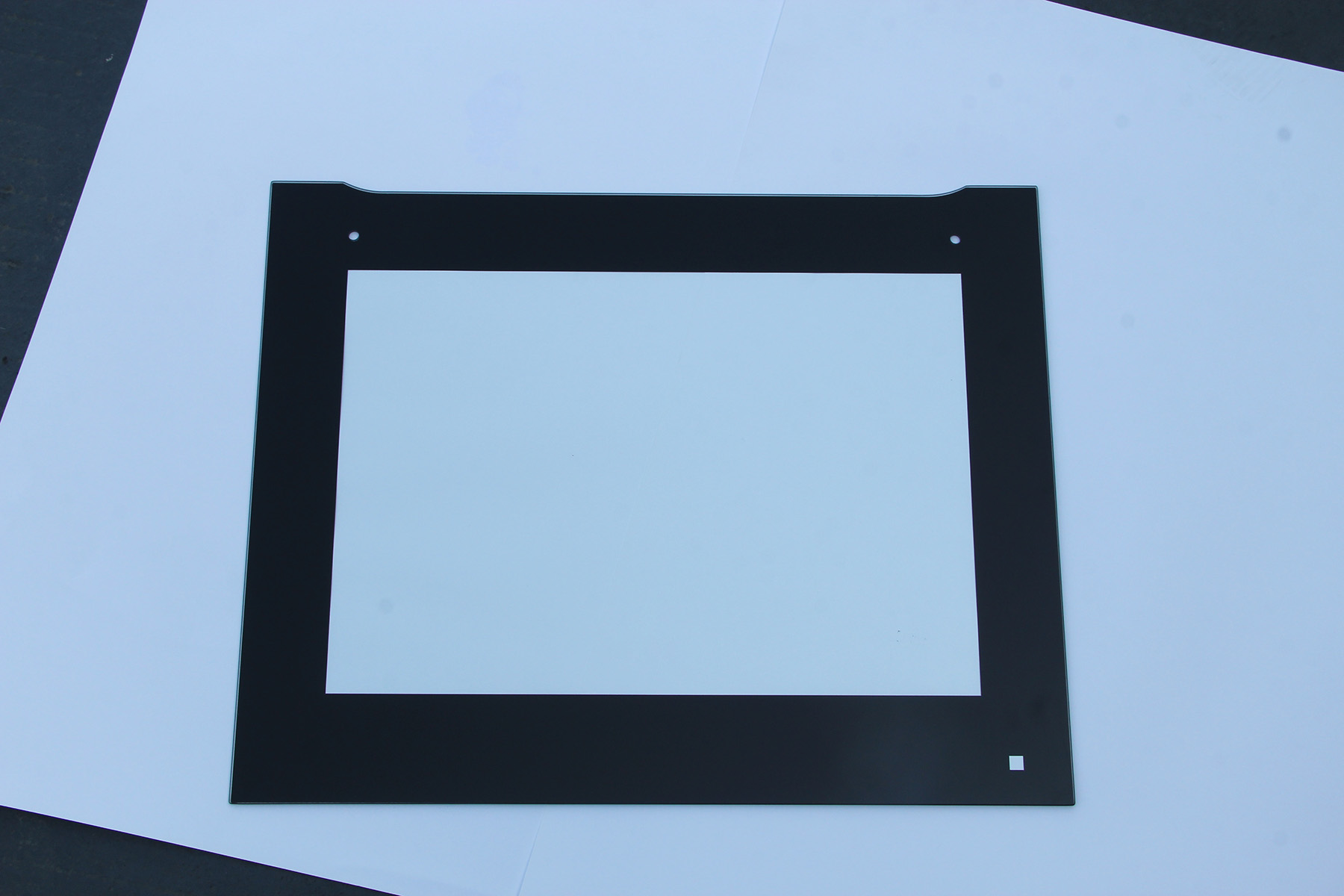
Oven glass door replacement refers to replacing damaged or worn glass components in an oven door assembly. Depending on the door design, replacement may involve the outer glass, inner glass, or multiple glass panels.
Oven glass is specially designed to withstand high temperatures and repeated heating and cooling cycles. It should not simply be replaced with ordinary household glass, because standard glass may not have the thermal resistance and safety performance required for oven applications.
Common reasons for replacing Oven Door Glass include:
Cracked or broken glass
Scratches or surface damage
Reduced heat insulation
Loose or damaged glass mounting
Poor visibility through the oven door
Damage caused by thermal shock or impact
The correct replacement glass should match the original oven's dimensions, thickness, shape, mounting structure, and performance requirements.
The outer glass is the glass panel facing the outside of the oven. It contributes to the appearance of the appliance while also providing an additional barrier between the hot oven cavity and the surrounding environment.
Oven glass outer door replacement is commonly required when the external glass panel is cracked, scratched, shattered, or otherwise damaged.
Depending on the oven design, the outer panel may be:
Flat or curved
Transparent or specially treated
Tempered for improved safety
Printed with decorative patterns or borders
Designed with mounting holes or brackets
Available in different thicknesses and dimensions
For appliance manufacturers and replacement-part suppliers, accurate dimensional control is particularly important. Even a small difference in the position of mounting holes or edges can affect the installation of the glass panel.
The inner glass door for oven is positioned closer to the oven cavity and is directly exposed to high temperatures. It therefore plays an important role in thermal protection and heat management.
Inner glass is typically designed to tolerate repeated exposure to high temperatures and temperature changes. It may also be combined with other glass layers to create a multi-layer oven door structure.
A properly designed inner glass panel can help:
Withstand high operating temperatures
Reduce heat transfer toward the outside
Maintain a clear view of food during cooking
Improve oven door safety
Support the overall insulation structure
Reduce the risk of glass failure caused by thermal stress
Because the inner panel operates in a demanding environment, selecting suitable heat-resistant glass and maintaining accurate processing quality are essential.
Inner Doors for Ovens can refer to the inner door components or inner glass assemblies used in different oven door constructions. The exact design varies according to the oven model, application, and manufacturer.
A modern oven door may include several components:
Outer glass panel
Inner glass panel
Intermediate glass panel
Door frame
Sealing components
Glass supports or fixing brackets
Handle and mounting hardware
The combination of these components creates a barrier that helps retain heat inside the oven while keeping the external door surface at a more manageable temperature.
For this reason, replacing only one glass layer requires attention to the complete door structure.
Although both components are part of the oven door, their functions are different.
| Feature | Outer Glass | Inner Glass |
|---|---|---|
| Position | Outside of the oven door | Toward the oven cavity |
| Main function | Appearance, protection, insulation | Heat resistance and thermal protection |
| Heat exposure | Lower than inner glass | Higher |
| Common damage | Scratches, cracks, impact | Thermal stress, cracks, contamination |
| Replacement focus | Appearance and dimensional fit | Heat resistance and safety |
| Customization | Size, shape, printing, finish | Size, shape, thickness, heat resistance |
Understanding this difference is especially important when ordering an oven glass door replacement. A supplier should confirm whether the required component is an outer panel, inner panel, or complete glass door assembly.
Oven doors experience repeated heating and cooling. During operation, the glass can be exposed to significant temperature differences between the oven cavity and the surrounding environment.
This creates thermal stress within the glass. If the material or processing is unsuitable, repeated thermal cycling can increase the risk of cracking or failure.
Specialized oven glass is therefore selected and processed according to the required temperature and safety conditions. Depending on the design, tempered glass and other heat-resistant glass solutions can be used to provide the necessary performance.
The glass also needs to maintain dimensional stability after repeated heating cycles so that it continues to fit securely within the oven door frame.
An oven door does not always need to be replaced as a complete assembly. In some cases, replacing the damaged glass panel is a practical solution.
Consider oven glass door replacement when:
The glass has visible cracks
The glass has broken or shattered
The outer panel has serious scratches
The inner panel is damaged
Heat insulation performance has decreased
The glass no longer fits securely in the door frame
The original glass has become difficult to clean or maintain
Before ordering replacement glass, it is important to check the oven model and original glass specifications.
Different oven manufacturers use different door structures, dimensions, and mounting methods. As a result, replacement glass is not necessarily a one-size-fits-all product.
A custom glass solution can be manufactured according to requirements such as:
Glass length and width
Glass thickness
Flat or curved shape
Edge processing
Mounting holes
Corner radius
Surface treatment
Printing and decorative patterns
Heat resistance requirements
For appliance brands and distributors, custom production can also support different oven models without requiring major changes to the original door structure.
When sourcing replacement glass, several factors should be considered.
First determine whether you need the outer glass, inner glass, or another layer in the door assembly. This prevents ordering the wrong component.
Measure the length, width, thickness, corner radius, and hole positions according to the original specifications.
The inner panel generally experiences greater thermal exposure, so its material and construction must be suitable for the oven's operating conditions.
The replacement glass should be compatible with the existing frame, brackets, seals, and fixing components.
For OEM and replacement applications, an experienced glass manufacturer can help verify drawings, samples, dimensions, materials, and processing requirements before mass production.
Oven glass components are used in many residential and commercial cooking appliances, including:
Built-in ovens
Electric ovens
Gas ovens
Freestanding ovens
Kitchen ranges
Commercial cooking equipment
Multifunction ovens
Household baking ovens
The exact glass construction depends on the oven's temperature, door design, safety requirements, and target market.
In many oven designs, the inner glass panel can be replaced separately. However, the replacement method depends on the specific oven door construction and mounting system.
Yes. If the inner glass and other components remain undamaged, an oven glass outer door replacement may be sufficient. The replacement glass should match the original dimensions and mounting requirements.
No. Ordinary glass is generally not designed for the high temperatures and repeated thermal cycles experienced by oven doors. Specialized oven glass should be used.
Check the location of the damaged panel. The outer glass faces the user, while the inner glass is positioned toward the oven cavity. Checking the oven model and original part number is also recommended.
Yes. Custom oven glass can be produced according to specific dimensions, thicknesses, shapes, hole positions, edge treatments, and printing requirements.
Reliable oven glass door replacement requires more than simply finding a piece of glass with the correct size. The glass must be suitable for high-temperature applications and compatible with the structure of the original oven door.
Whether you need an oven glass outer door replacement, an inner glass door for oven, or complete Inner Doors for Ovens, selecting the right material, dimensions, and processing technology is essential for safe and reliable performance.
For appliance manufacturers, distributors, and replacement-part suppliers, working with an experienced OEM glass manufacturer can provide customized solutions for different oven models and door designs.

Tel/Whatsapp:+86 13423078888
E-mail:chloe_mo@wchtemperglass.com
Address:Yuan He Road North, Xiang Xi Industrial Zone, Shipai Town, Dongguan City, Guangdong Province, China


Privacy Policy Cookie Policy Terms and Conditions
Copyright © 2025 W.C.H Temper Glass Co., Ltd. All rights reserved.