
 English

Blog
Provide One-Stop Customized Services
WCH is dedicated to providing high-precision and high-quality
tempered glass customization services for home appliance manufacturers.


2026-11-04 16:45:49
Custom Tempered Glass is widely used in household appliances and commercial kitchen equipment because of its strength, heat resistance, and safety performance. From Oven Door Glass and microwave oven door glass to oven Control Panel Glass, customized glass components play an important role in appliance functionality, durability, and appearance.
Unlike ordinary glass, tempered glass is specially processed through controlled heating and rapid cooling to improve its mechanical strength and resistance to thermal stress. For appliance manufacturers, choosing the right tempered glass supplier is essential to ensure that glass components meet specific design, performance, and safety requirements.
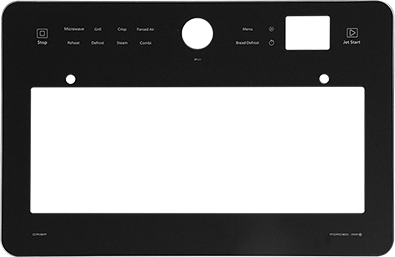
Custom Tempered Glass is glass that has undergone a thermal tempering process and is manufactured according to specific dimensions, thicknesses, shapes, edge treatments, and application requirements.
During production, the glass is heated to a high temperature and then rapidly cooled. This process creates compressive stress on the surface and tensile stress inside the glass, making it stronger than standard annealed glass.
When broken, fully tempered glass generally fractures into relatively small pieces rather than large, sharp shards, helping reduce the risk of serious injury.
For oven and microwave manufacturers, custom glass processing allows each component to match the appliance's structure, temperature conditions, and functional requirements.
Oven glass is an important component of modern cooking appliances. It must provide visibility, withstand operating conditions, and fit securely within the appliance door or control panel.
Oven Door Glass is designed for installation in the door assembly of electric and gas ovens. It allows users to monitor food during cooking without opening the oven door, helping maintain a stable internal temperature.
Depending on the oven design, the door may contain multiple glass panels, insulation layers, and supporting structures. The glass must be selected according to the appliance's temperature requirements, installation method, and overall construction.
Tempered Glass for Oven Door applications is designed to provide improved mechanical strength and thermal performance compared with ordinary glass.
It is commonly used in oven door assemblies where resistance to temperature changes, impact, and daily use is important. The required glass composition, thickness, and processing method should be determined according to the oven's actual operating conditions.
Inner Glass for Oven Door is installed on the interior side of an oven door assembly. It is exposed to higher temperatures than the outer panel and therefore requires careful material selection.
Depending on the appliance design, the inner panel may use specially specified heat-resistant glass rather than standard tempered glass. Manufacturers should evaluate thermal shock resistance, maximum operating temperature, and compatibility with the door structure before selecting a material.
Front Oven Door Glass refers to the visible glass panel on the front of an oven door. It combines functional visibility with the appliance's exterior appearance.
Custom manufacturing supports different shapes, sizes, thicknesses, edge finishes, and surface treatments to match various oven models and product designs.
A Double Glass Oven Door uses two glass panels within the door structure, creating an insulating space between the inner and outer surfaces.
This design helps reduce heat transfer to the exterior door surface while maintaining visibility inside the oven. Depending on the construction, additional glass layers may also be used to improve thermal insulation.
The glass configuration must be designed around the oven's temperature, sealing structure, and safety requirements.
Microwave Oven Door Glass is a specialized component used in microwave oven door assemblies. It is designed as part of a complete door structure that supports visibility and microwave safety.
Microwave doors typically incorporate a conductive metal mesh or shielding structure to prevent microwave energy from escaping during operation. The glass panel must be compatible with this assembly.
It is important to distinguish microwave oven door glass from conventional oven glass. They have different functional requirements, and ordinary tempered glass alone cannot provide microwave shielding.
Oven Control Panel Glass is used on the front interface of modern ovens and other kitchen appliances. It provides a smooth, durable surface for buttons, touch controls, displays, and printed graphics.
Compared with conventional plastic panels, glass control panels can offer a premium appearance, scratch resistance, and easy cleaning.
Custom processing options may include:
Customized dimensions, thicknesses, and shapes
Screen printing and customized colors
Silk-screened icons, logos, and control markings
Cutouts and openings for functional components
Polished or processed edges
Surface treatments to improve appearance and usability
For touch-control ovens, the glass panel must also be compatible with the touch sensor system and electronic components.
The tempering process improves the glass's resistance to mechanical stress compared with ordinary annealed glass. This makes it suitable for appliance components that experience frequent handling and daily use.
Oven glass must be selected according to its intended temperature range and thermal cycling conditions. Not all tempered glass is suitable for direct exposure to high oven temperatures. Material selection and testing are essential for reliable performance.
Fully tempered glass is designed to break into smaller fragments when it fails, helping reduce the risk associated with large sharp glass pieces. The appropriate safety requirements should be confirmed for each appliance application.
Custom Tempered Glass can be manufactured in different sizes, shapes, colors, and finishes. Printing, decorative patterns, and customized openings help appliance manufacturers create consistent product designs.
Glass surfaces are generally smooth and easy to clean, making them suitable for oven doors and control panels exposed to fingerprints, grease, and cooking residue.
Different appliance applications require different glass specifications. A professional tempered glass supplier should be able to provide customized processing based on product drawings and technical requirements.
| Customization | Description |
|---|---|
| Glass thickness | Selected according to structural and application requirements |
| Glass dimensions | Customized length, width, and shape |
| Edge processing | Flat polished, beveled, or other specified edge treatments |
| Glass color | Clear, tinted, or customized colors |
| Screen printing | Logos, patterns, icons, and control markings |
| Cutouts | Openings for buttons, displays, or installation components |
| Surface treatment | Customized finishes according to design requirements |
| Tempering | Heat treatment selected according to the glass application |
For oven applications, manufacturers should also confirm glass composition, thermal performance, and compatibility with the complete appliance assembly.
Selecting the right Tempered Glass Supplier is important for appliance manufacturers seeking consistent quality and reliable production.
1. Application Experience
Choose a supplier familiar with appliance glass applications, including oven door glass, inner glass panels, microwave oven door glass, and oven control panel glass.
2. Custom Processing Capabilities
A suitable supplier should be able to process glass according to technical drawings, including cutting, drilling, edge finishing, printing, and other required operations.
3. Material and Temperature Compatibility
Different glass types have different thermal properties. For oven door applications, confirm whether the proposed glass is suitable for the actual operating temperature and thermal cycling conditions.
4. Quality Inspection
Ask about inspection procedures for dimensions, thickness, appearance, edge quality, and tempering performance. Application-specific testing may also be required.
5. Stable Production and Delivery
For OEM and ODM appliance projects, stable production capacity, repeatable quality, and reliable delivery schedules are important factors in long-term cooperation.
Custom Tempered Glass is used in a wide range of household and commercial appliances, including:
Electric ovens and built-in ovens
Gas ovens and cooking ranges
Microwave ovens
Double-glass oven door assemblies
Oven front panels and viewing windows
Oven control panels and touch interfaces
Other kitchen appliances requiring customized glass components
Each application requires glass specifications that match its structural, functional, and operating conditions.
1. What is the difference between ordinary glass and tempered glass?
Tempered glass undergoes a controlled heating and rapid cooling process that improves its mechanical strength and changes its fracture behavior. Ordinary annealed glass is generally less resistant to mechanical and thermal stress.
2. Is tempered glass suitable for oven doors?
It depends on the glass composition, thickness, processing, and oven operating conditions. Some oven door applications use specially specified heat-resistant glass, such as glass-ceramic, rather than conventional tempered soda-lime glass. Always confirm the material's temperature rating and suitability with the appliance manufacturer.
3. Can oven door glass be customized?
Yes. Oven door glass can be customized in dimensions, thickness, shape, color, edge treatment, and other processing details according to the appliance design.
4. What is inner glass for an oven door used for?
Inner glass is installed on the oven-facing side of the door assembly. It helps form the door's thermal barrier and must withstand the temperature conditions inside the oven.
5. Is microwave oven door glass the same as regular oven glass?
No. Microwave oven doors require a specific shielding structure, typically incorporating conductive metal mesh. The glass panel must be designed to work as part of this complete safety assembly.
6. What is oven control panel glass?
Oven control panel glass is a glass front panel used for buttons, touch controls, displays, and decorative elements. It can be customized with printing, colors, cutouts, and other finishes.
7. What information is needed to order custom tempered glass?
Suppliers typically need product drawings or samples, glass dimensions, thickness, material requirements, edge specifications, surface treatments, application details, and estimated order quantity.
Whether you need Oven Door Glass, Inner Glass for Oven Door, Microwave Oven Door Glass, or Oven Control Panel Glass, choosing the right glass specification is essential for product safety, performance, and appearance.
As a professional Tempered Glass Supplier, we provide customized glass processing solutions based on your drawings, samples, and application requirements. Contact us to discuss your project and find the right custom glass solution for your appliance products.

Tel/Whatsapp:+86 13423078888
E-mail:chloe_mo@wchtemperglass.com
Address:Yuan He Road North, Xiang Xi Industrial Zone, Shipai Town, Dongguan City, Guangdong Province, China


Privacy Policy Cookie Policy Terms and Conditions
Copyright © 2025 W.C.H Temper Glass Co., Ltd. All rights reserved.