
 English

Blog
Provide One-Stop Customized Services
WCH is dedicated to providing high-precision and high-quality
tempered glass customization services for home appliance manufacturers.


2026-08-27 14:04:43
Low-E Glass, short for Low Emissivity Glass, is a specially coated glass designed to control heat radiation. While Low-E glass is widely associated with energy-efficient building applications, it can also be specially engineered for Oven Glass. In oven applications, Low-E Glass is used as a functional glass component to help improve thermal performance, reduce heat radiation, and support safer and more efficient oven operation.
For oven manufacturers and appliance companies, choosing the right Low-E Glass for ovens is important because oven doors need to withstand repeated heating and cooling cycles while providing effective thermal management and visibility.
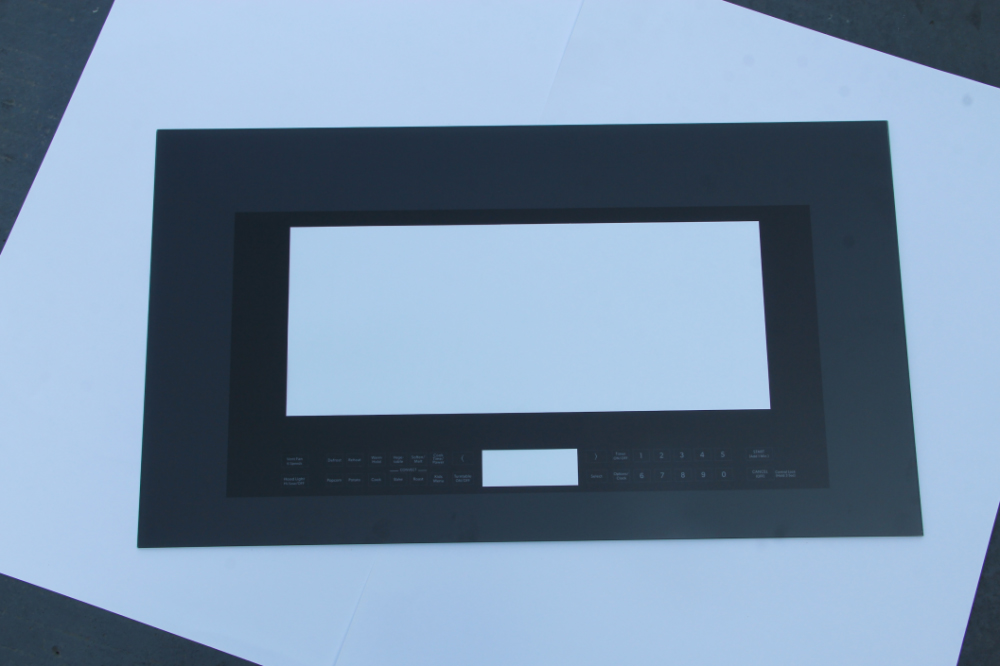
Low-E means Low Emissivity. Emissivity refers to the ability of a material to emit thermal radiation. Low-E Glass features a specialized low-emissivity coating on the glass surface that helps reduce the transfer of radiant heat.
Unlike ordinary glass, Low-E coated glass can reflect a portion of infrared thermal radiation while allowing visible light to pass through. This makes it suitable for applications where controlling heat transfer is important.
For oven applications, the Low-E coating is specifically selected and processed to work with the high-temperature environment of an oven door.
An oven generates high temperatures during cooking, and a significant amount of thermal energy is generated inside the cooking chamber. The oven door must provide a barrier between the high-temperature interior and the outside environment.
Low-E Glass for Oven Doors works by reducing radiant heat transmission through the glass. The low-emissivity coating helps reflect thermal radiation back toward the oven cavity, which can contribute to better thermal insulation of the oven door.
A typical oven door may use multiple layers of glass. When Low-E Glass is incorporated into the door structure, it can work together with the air gaps and other glass layers to improve the overall thermal performance of the oven door.
The primary function of Low-E Glass is to reduce radiant heat transfer. Its low-emissivity coating reflects part of the infrared radiation, helping limit heat escaping through the oven door.
Using Low-E Glass in oven doors can improve the thermal insulation performance of the door assembly. This is especially important for modern ovens that require effective heat retention during cooking.
By helping reduce heat loss through the oven door, Low-E Glass can contribute to improved oven energy efficiency. Better heat retention may help the oven maintain its target temperature more effectively during operation.
Low-E coating can reduce the amount of radiant heat transferred toward the outside surface of the oven door. This makes thermal control an important consideration when designing Oven Door Glass.
Depending on the coating design and glass configuration, Low-E Glass can maintain good visible light transmission. This allows users to observe food through the oven door without opening the oven frequently.
Both ordinary oven glass and Low-E Glass can be used in oven doors, but their thermal characteristics are different.
| Feature | Ordinary Oven Glass | Low-E Glass for Oven |
|---|---|---|
| Low-emissivity coating | No | Yes |
| Radiant heat control | Basic | Improved |
| Thermal insulation contribution | Standard | Enhanced |
| Heat retention | Standard | Improved |
| Oven door application | Yes | Yes |
The actual thermal performance of an oven door depends not only on the glass but also on the number of glass layers, air gaps, coating position, frame design, sealing system, and overall door construction.
In this application, Low-E Glass is specifically designed for oven glass and oven doors. It is not intended as a general-purpose architectural glass product.
Typical applications include:
Electric oven doors
Built-in oven doors
Household oven glass
Kitchen appliance glass
High-temperature oven door assemblies
Multi-layer Oven Door Glass
Depending on the oven design, Low-E Glass can be incorporated into multi-layer oven door constructions to provide improved control of radiant heat.
Low-E oven glass generally starts with heat-resistant glass suitable for high-temperature appliance applications. A specialized low-emissivity coating is then applied to a selected glass surface.
The glass and coating system must be designed to withstand the thermal conditions associated with oven operation. Important considerations include thermal stability, coating durability, optical performance, and compatibility with the oven door structure.
For this reason, Low-E Glass for ovens should be manufactured according to the specific requirements of the appliance rather than treated as ordinary coated glass.
Oven glass is exposed to repeated high temperatures and temperature changes. The glass must therefore have suitable thermal resistance for the intended oven application.
The coating needs to provide effective control of thermal radiation while remaining suitable for the oven's operating conditions.
Good optical performance allows users to see the food inside the oven while the door remains closed.
Oven manufacturers should select the appropriate oven glass thickness, dimensions, and edge processing according to the door design and structural requirements.
The position of the Low-E coating within a multi-layer oven door is an important design consideration. The correct coating position can help optimize thermal performance while protecting the coating from unnecessary exposure.
Low-E Glass is commonly integrated into multi-layer oven door structures. The complete assembly should be evaluated as a system to ensure proper thermal performance and reliable operation.
Modern ovens require more than basic heat-resistant glass. The oven door needs to provide visibility while also helping manage the high-temperature environment inside the appliance.
Low-E oven glass provides an additional method of controlling radiant heat. By reducing infrared heat transfer, it can help improve heat retention and the overall thermal performance of the oven door.
For oven manufacturers, appliance brands, and glass processors, Low-E Glass can therefore be an important component when developing high-performance oven door systems.
Low-E Glass, or Low Emissivity Glass, is glass with a specialized low-emissivity coating that reduces radiant heat transfer. In this application, it is designed specifically for use as oven glass and oven door glass.
Low-E stands for Low Emissivity. The term describes the glass's ability to reduce the emission and transfer of thermal radiation.
For this product application, Low-E Glass is used specifically for oven doors and oven glass assemblies, where it helps control radiant heat and improve thermal performance.
Yes. Low-E Glass can be specially manufactured for oven doors and high-temperature appliance applications. The glass specification should match the oven's temperature, door structure, dimensions, and performance requirements.
Yes. The low-emissivity coating can reflect part of the infrared thermal radiation back toward the oven cavity, helping reduce radiant heat loss through the oven door.
No. Ordinary oven glass does not necessarily have a low-emissivity coating. Low-E oven glass includes a specialized coating designed to reduce radiant heat transfer and improve the thermal performance of the oven door.
Yes. Low-E oven glass can be manufactured according to specific requirements such as glass thickness, dimensions, coating specifications, edge processing, and multi-layer oven door construction.
Low-E Glass is a low-emissivity coated glass designed to control radiant heat transfer. When specially developed for oven applications, Low-E Glass for ovens can help improve heat retention, reduce radiant heat transmission, and enhance the thermal performance of oven doors while maintaining clear visibility.
For manufacturers looking for Low-E oven glass, Low-E oven door glass, Low-E coated glass for ovens, or custom oven glass, the glass specification should be selected according to the oven's operating temperature and door construction to achieve reliable performance.

Tel/Whatsapp:+86 13423078888
E-mail:chloe_mo@wchtemperglass.com
Address:Yuan He Road North, Xiang Xi Industrial Zone, Shipai Town, Dongguan City, Guangdong Province, China


Privacy Policy Cookie Policy Terms and Conditions
Copyright © 2025 W.C.H Temper Glass Co., Ltd. All rights reserved.